
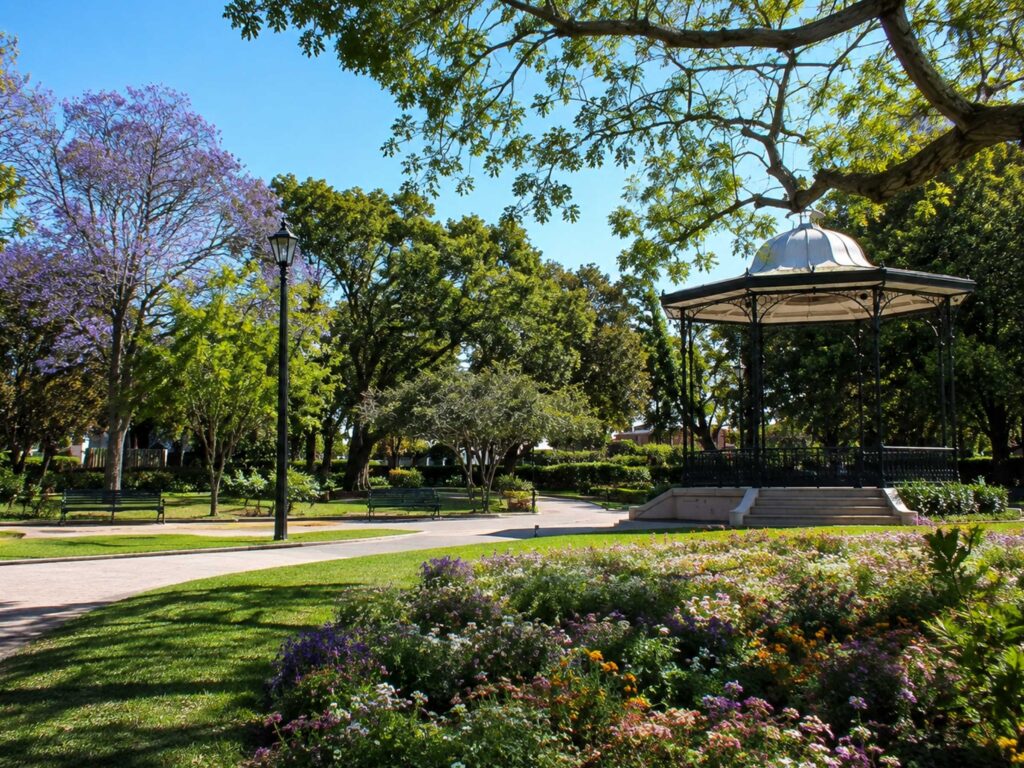
Long before modern planners debated walkable neighbourhoods, Adelaide possessed a distinct structural advantage. Colonel William Light laid out a civic footprint that prized breathing space, logical flow, and accessible parklands. His foundational vision stretches far beyond the central squares, deeply influencing the surrounding residential enclaves.
A blueprint for suburban flow
Toorak Gardens stands as a prime example of how this geometric foresight translates into an elevated lifestyle. The original grid principles encouraged a spaciousness that private developers later sought to replicate across the eastern suburbs. According to the Burnside Heritage Survey, early property pioneers like developers Jackman and Treloar applied strict town planning theories directly to Toorak Gardens.
They mandated a single dwelling per block and imposed a minimum build cost of 600 dollars. This early commitment to quality established a structural rhythm that persists today. Broad avenues intersect predictably, allowing mature trees to form uninterrupted canopies over the footpaths.
The grid does more than define property boundaries. It fundamentally dictates how residents experience their daily environment. The same heritage records reveal that early suburban designers envisioned an orderly, expansive landscape that completely rejected cramped urban conditions.
Preserving architectural integrity
Community living in Toorak Gardens is intrinsically tied to its built environment. The interplay between grand character homes and wide, gridded streets creates an inviting atmosphere for daily neighbourhood interactions. Maintaining this aesthetic requires continuous vigilance from local authorities and residents alike.
Writing for InDaily, Belinda Willis highlights that preserving the historic charm of the area, particularly the distinctive Tudor style houses in Toorak Gardens, remains a priority for local governance. Stronger streetscape standards ensure that cohesive suburban blocks do not fall victim to mismatched modern developments.
The value of this deliberate spatial planning extends well beyond local appreciation. As South Australian author Stuart Symons points out in InDaily, the foundational city grid layout and the surrounding parklands constitute an enormous architectural asset. This geometric legacy continues to generate international attention while fostering an immediate sense of openness for residents.
The future of spatial planning
Modern routines increasingly demand a harmonious balance between private retreat and community connection. The layout of Toorak Gardens naturally provides both. Orderly streets slow local traffic and encourage pedestrian movement, turning casual strolls into organic opportunities for social engagement.
By resisting the urge to subdivide indiscriminately, the suburb actively honours its structural origins. The enduring brilliance of this early planning lies in anticipating the human need for physical space rather than merely mapping roads. As new generations inherit this geometric harmony, they prove that exceptional urban design does not easily expire.